JDM OSAKA
JDM culture fascinates car enthusiasts around the world. Behind these three letters lies far more than a simple automotive style. It is a genuine culture born in Japan, shaped by Japanese engineering, mountain roads, urban expressways, and a unique community of enthusiasts.
Today, cities such as Tokyo, Yokohama, and Osaka have become must-visit destinations for fans of iconic Japanese cars like the Nissan Skyline GT-R, Toyota Supra, and Mazda RX-7.
In this article, we will first look at what JDM really means, then explore Japanese car culture more broadly before focusing on Osaka and the automotive experiences available there for enthusiasts.
What does JDM mean in automotive culture ?
The term JDM stands for Japanese Domestic Market. Originally, it referred to vehicles and automotive parts intended exclusively for the Japanese market. The expression emerged to distinguish models sold only in Japan from those exported to Europe or North America.
The Japanese car market developed differently from other major global markets. Several factors shaped this uniqueness, including strict regulations, the high cost of vehicle ownership, mandatory inspections known as Shaken, and roads that are often narrow, especially in urban and mountainous areas.
These constraints pushed Japanese manufacturers to innovate quickly. Many technologies were first introduced on domestic-market models before being exported elsewhere in the world. This approach gave rise to cars that were high-performing, lightweight, and technically advanced, and these models have since become icons of JDM culture.
Over time, the term JDM moved beyond its technical meaning and came to describe a broader car culture associated with tuning, nighttime meets, and a distinctive automotive aesthetic developed in Japan.
JDM culture in Japan
In Japan, JDM culture extends far beyond the cars themselves. It is built around a complete ecosystem of enthusiasts, iconic roads, parking areas, and specialized tuning shops. At night, certain urban areas become gathering points where owners meet to talk, compare cars, and admire some of the most carefully built machines.
Mountain roads known as Touge also play a major role in Japanese car culture. These technical roads helped shape the development of lightweight, well-balanced cars perfectly suited to spirited driving. At the same time, Japanese urban expressways became famous for nighttime drives and informal meets between enthusiasts.
Some locations have become legendary over the years. Places such as Daikoku Parking Area, Tatsumi Parking Area, Umihotaru, and the Hakone Turnpike now attract enthusiasts from around the world. Still, this culture is not limited to Tokyo. Other Japanese cities have their own car scenes as well, including Osaka.
Some most iconic JDM cars
JDM culture is rooted in a generation of Japanese sports cars produced mainly between the 1980s and the 2000s.
Nissan Skyline GT-R (R32, R33, R34)
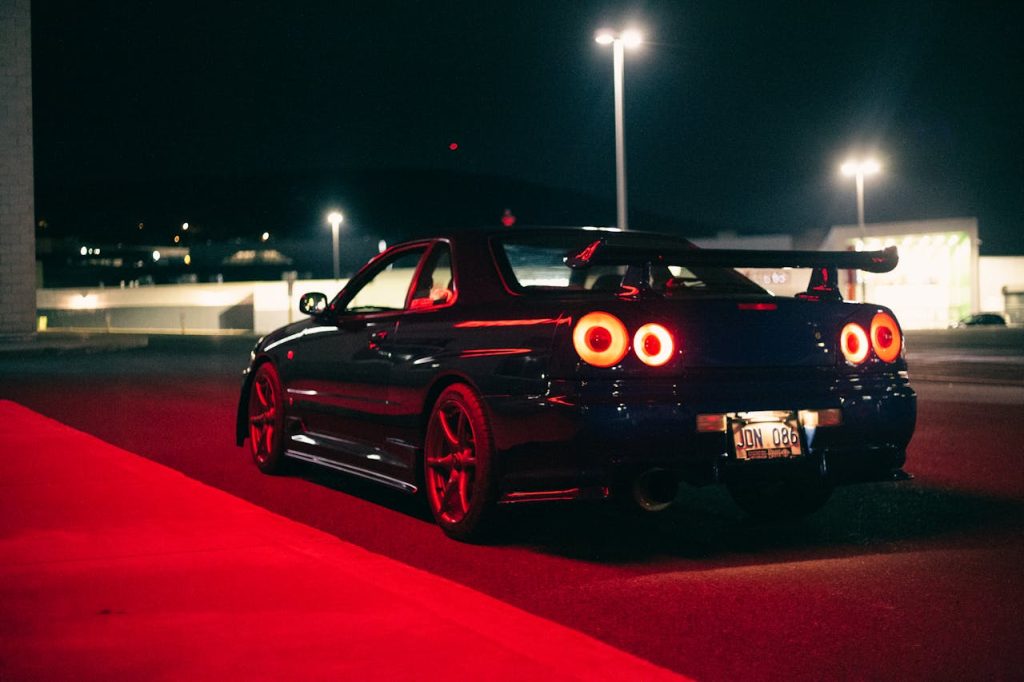
The Nissan Skyline GT-R is probably the most iconic car in JDM culture. The R32, nicknamed Godzilla, dominated Japanese motorsport thanks to its twin-turbo RB26DETT engine and ATTESA E-TS all-wheel-drive system. Later generations further strengthened its legendary status.
Toyota Supra (A70, A80)
The Toyota Supra, especially the A80 generation, established itself thanks to its 2JZ-GTE engine and exceptional tuning potential. It remains one of the benchmark cars of Japanese tuning culture.
Mazda RX-7 (FD3S)
The Mazda RX-7 FD3S, powered by the rotary 13B-REW engine, became an icon of Japanese mountain roads and Touge culture.
Honda NSX (NA1 / NA2)
The Honda NSX changed the perception of Japanese sports cars with its aluminum chassis, VTEC engine, and development influenced by Ayrton Senna.
Even more iconic JDM models
The Toyota AE86, Nissan Silvia S13 through S15, Mitsubishi Lancer Evolution, Subaru Impreza WRX STI, Honda Civic Type R EK9, Nissan Fairlady Z, Toyota Chaser, and Mark II are also part of the core lineup of cult JDM models.
The JDM scene in Osaka
Osaka has an active automotive scene that is often more understated than Tokyo’s, but especially authentic. At night, certain urban areas become meeting points for enthusiasts, particularly around expressways and outlying parking areas.
Automotive spots around Osaka
Some places are known for car meets:
- Hanshin Expressway Loop
- Higashi-Osaka Parking Area
- Urban night-driving routes
- Outlying parking areas
Unlike Tokyo, Osaka’s car scene tends to remain more local. The atmosphere is often more relaxed, with a stronger presence of Japanese enthusiasts rather than international visitors.
Automotive experiences in Osaka
Osaka is now an appealing destination for anyone who wants to experience JDM culture through a range of automotive activities.
Renting JDM cars in Osaka
It is possible to rent iconic cars such as:
- Nissan Skyline GT-R (R32, R33, R34, R35)
- Mazda RX-7
- Mitsubishi Lancer Evolution
- Subaru WRX STI
- Toyota GT86 / GR86
Some companies even specialize exclusively in GT-R rentals for driving through Osaka, Kyoto, or Hyogo.
Riding in the passenger seat of a JDM car
For visitors without an international driving permit, or for those who simply want to enjoy the experience without driving, it is possible to join passenger tours in JDM cars. These experiences usually include night drives, runs on urban expressways, and visits to automotive spots around Osaka.
These tours also offer the chance to connect with local enthusiasts and discover Japanese car culture in an authentic setting.
Automotive tours in Osaka
Some automotive tours offer full immersion into the local JDM scene. These experiences generally include meeting local enthusiasts, visiting parking areas, exploring nighttime car spots, and sometimes even attending gatherings.
On these tours, it is common to see iconic models such as the Nissan GT-R, Toyota Supra, Mazda RX-7, Honda NSX, and Nissan Silvia. Osaka offers a particularly compelling way to experience Japanese car culture through urban night drives, legendary cars, and encounters with local enthusiasts.